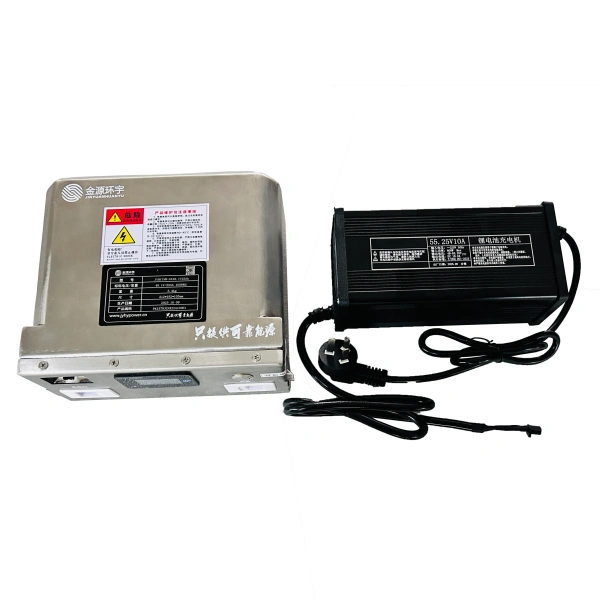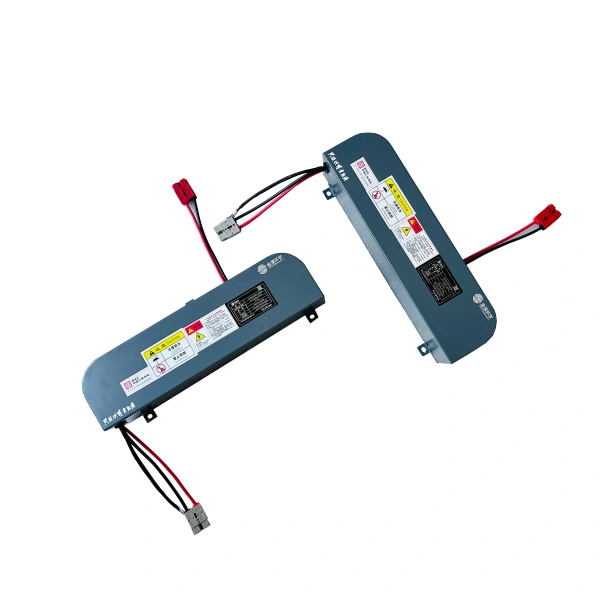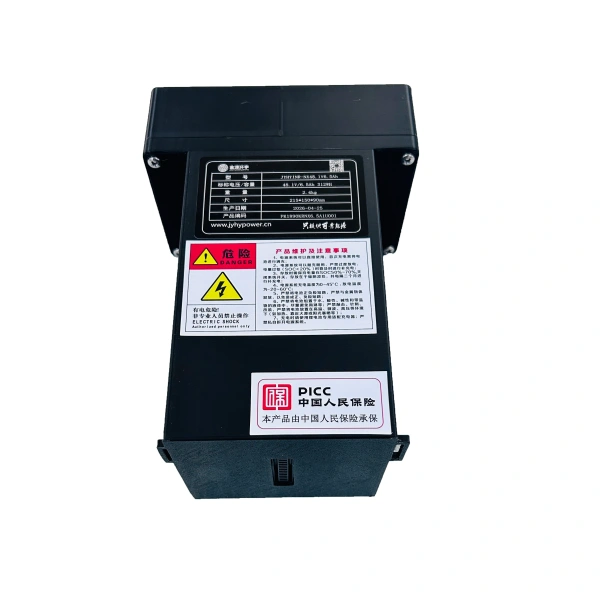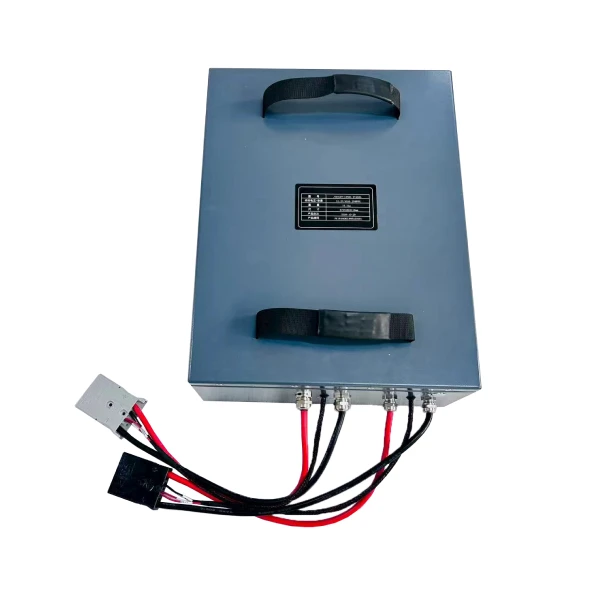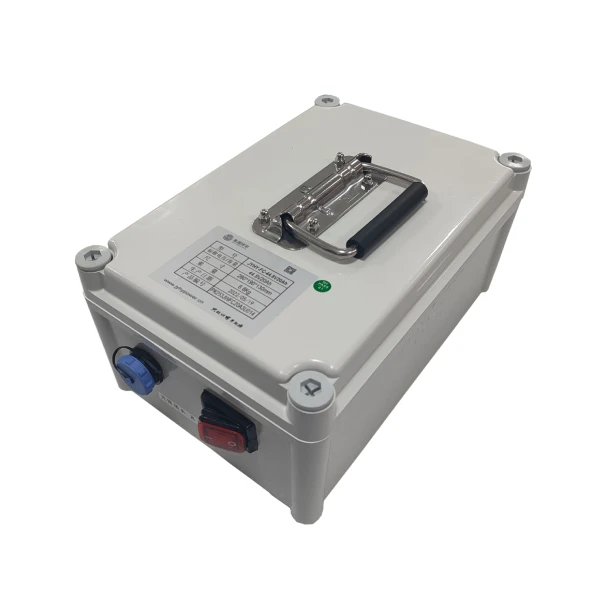
Product Overview
The PK253A32 is a low–temperature–optimised lithium iron phosphate (LiFePO₄) battery system engineered specifically for operations in cold environments – including cold storage facilities, refrigerated warehouses, freezer distribution centres, winter outdoor equipment, and other low-temperature industrial applications.
The system integrates 3.2V 20Ah LiFePO₄ cells in a 1P14S configuration (14 cells in series), delivering a nominal 44.8V with 20Ah rated capacity.
What sets the PK253A32 apart is its integrated PI (Polyimide) heating film system – a semiconductor-grade heating solution that ensures reliable battery operation even in sub-zero environments. The PI heating film provides uniform, efficient heat distribution across the battery pack, enabling safe charging and optimising discharge performance at low temperatures.
An intelligent Battery Management System (BMS) monitors voltage, current, temperature, and state of charge in real time, providing comprehensive protection against overcharge, over-discharge, overcurrent, short circuit, and temperature extremes – ensuring safe and reliable operation in the most demanding cold environments.
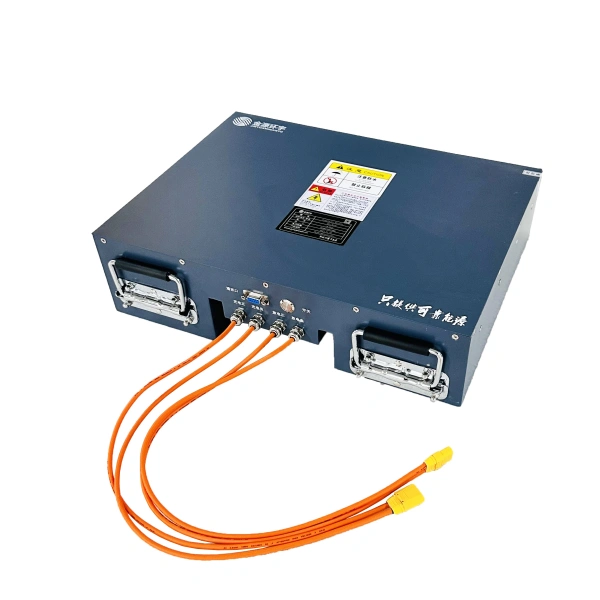
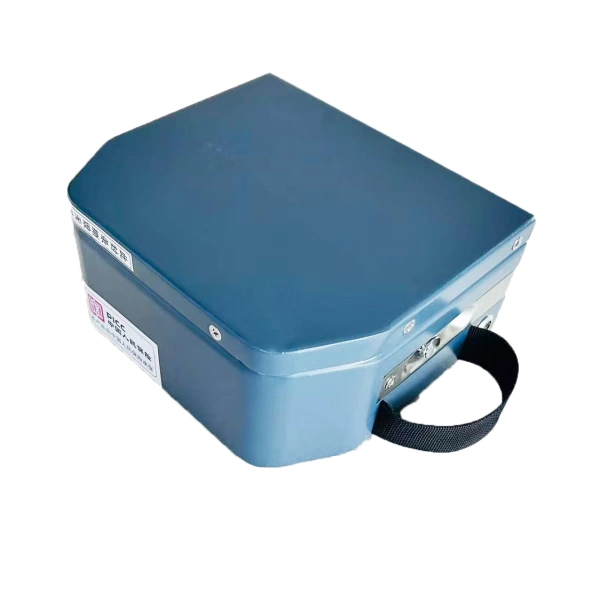
The battery features a common–port (same–port) design with an XT90 connector, a compact plastic enclosure, and a simple ON/OFF switch for easy power management.
Technical Specifications
| Model | JYHYLFP-PH44.8V20Ah |
| Cell Chemistry | LiFePO₄ (Lithium Iron Phosphate) |
| Cell Model | LFP-PH20Ah |
| Configuration | 1P14S (14 cells total) |
| Nominal Voltage | 44.8V |
| Rated Capacity | 20Ah @ 0.3C, 25°C |
| Minimum Capacity | 19Ah @ 0.3C, 25°C |
| Standard Charge Current | 10A |
| Charge Cut-off Voltage | 51.1V (cell limit 3.65V, programmable) |
| Standard Discharge Current | ≤20A |
| Discharge Cut-off Voltage | 35V (cell limit 2.6V, programmable) |
| Continuous Discharge Current | 20A |
| Max. Discharge Current | 30A @ 15–45°C, ≤60s |
| Peak Discharge Current | 100A @ 15–45°C, <3s |
| Standard Charge Time | ~1 hour |
| Cycle Life | ≥2000 cycles (to 80% capacity) |
| Communication | None (standalone operation) |
| Charge/Discharge Port | XT90 (Common Port, AWG11, 100mm lead) |
| ON/OFF Switch | External switch line, XH2.54-2P, 100mm lead |
| Heating System | PI (Polyimide) heating film – built-in |
| Enclosure Material | Plastic, Grey finish |
| Dimensions (L×W×H) | 220mm × 158mm × 118mm (excluding handle & connectors) |
| Weight | ~5 kg |
Low-Temperature Technology – PI Heating Film System
🔥 What is PI Heating Film?
PI (Polyimide) heating film is a semiconductor–grade, ultra–thin, and highly efficient flexible heating element. It offers:
- Uniform heat distribution across the entire battery surface
- Rapid thermal response – fast heating to optimal operating temperature
- Exceptional durability – resistant to aging, oxidation, and mechanical stress
- Ultra–thin profile – minimal impact on overall pack dimensions
- Low power consumption – energy-efficient heating for extended operation
❄️ Why Heating is Essential for Low-Temperature Operation
Standard lithium batteries face significant challenges in cold environments:
| Challenge | Impact |
| Increased internal resistance | Reduced power output and efficiency |
| Limited charging capability | Charging below 0°C can cause lithium plating, permanently damaging the battery |
| Reduced usable capacity | Up to 30–50% capacity loss at -20°C |
| Slowed chemical reactions | Poor discharge performance and voltage sag |
The PK253A32’s PI heating film system overcomes all these limitations by actively maintaining the battery at optimal operating temperature, ensuring:
- Safe charging even in sub-zero environments
- Full capacity utilisation regardless of ambient temperature
- Consistent power delivery in cold storage and freezer conditions
- Extended cycle life – prevents low-temperature induced degradation
BMS Protection & Monitoring
The BMS provides comprehensive protection with the following features:
Cell voltage monitoring, cut-off at 3.65V/cell
Prevents deep discharge, cut-off at 2.6V/cell
Protects against excessive charge/discharge currents
Instantaneous response
Works in conjunction with PI heating system
Maintains uniform cell performance
≤ ±5%
Key Features
- Semiconductor–grade polyimide heating film – highly efficient and durable
- Uniform heating – ensures all cells are at optimal operating temperature
- Low power draw – heating energy consumption is minimised for maximum runtime
- Automatic temperature management – BMS controls heating activation based on temperature thresholds
- Single XT90 connector for both charging and discharging
- AWG11, 100mm lead – flexible and easy to connect
- Simplifies integration – one port means less cabling and fewer connections
- External switch line (XH2.54-2P, 100mm lead)
- Simple ON/OFF operation – easily disconnect power during storage or maintenance
- Convenient for operator use – eliminates the need for complex switching procedures
- 5kg total weight – easy to handle and install
- Plastic enclosure – lightweight, corrosion-resistant, and durable
- Compact footprint – 220×158×118mm – fits in tight equipment spaces
Operating Conditions
| Condition | Standard Range | With PI Heating Active |
| Charging | 0°C to 55°C | -20°C to 55°C (with heating) |
| Discharging | -20°C to 60°C | -30°C to 60°C (enhanced) |
| Storage | 0°C to 45°C | 0°C to 45°C (optimum 15–25°C) |
Typical Applications
Freezer warehouses, cold chain logistics centres
Food storage, pharmaceutical cold storage
Snow removal machinery, winter service vehicles
AGV operating in unheated warehouses or outdoor yards
Cold chain monitoring and automation
Manufacturing in cold climates
Winter operation in cold regions
Why Choose the PK253A32 for Cold Environments?
Enables safe charging and full capacity in sub-zero temperatures
Reliable operation in cold storage and freezer environments
Single XT90 connector – simple integration
Easy power management – no complex procedures
Sufficient power for extended cold-environment shifts
Supports power surges and demanding operations
Exceptional longevity – reduces total cost of ownership
5kg – easy installation and handling
220×158×118mm – fits in space-constrained equipment
Standalone operation – ready to use out-of-the-box
Application Focus – Cold Storage & Refrigerated Environments
Challenges in Cold Storage Applications
Cold storage and freezer facilities present unique challenges for battery-powered equipment:
- Sub–zero temperatures – freezers operate at -18°C to -25°C
- Temperature cycling – moving between cold storage and ambient areas
- Condensation – moisture can affect electrical connections
- Limited access – equipment must be reliable with minimal maintenance
How the PK253A32 Addresses These Challenges
| Challenge | PK253A32 Solution |
| Freezing temperatures | PI heating film maintains optimal battery temperature |
| Safe charging in cold | Heating system enables charging even at -20°C |
| Capacity loss | Active temperature management preserves full capacity |
| Condensation | Well-sealed plastic enclosure protects internal components |
| Reliability | BMS + heating system ensures consistent performance |
Notes & Warnings
- Use only the specified charger (51.1V, 10A, CC-CV).
- Charge only when battery temperature is within the permitted range.
- PI heating film – ensure the heating system is operational in sub-zero conditions before charging.
- Do not over–discharge – recharge within 24 hours after full discharge.
- For storage exceeding 2 months, maintain at ~50% SOC (approx. 44.8V).
- Storage voltage per cell: 3.2–3.35V.
- Do not connect batteries in series or parallel without proper engineering assessment.
- XT90 connector – ensure mating connector is properly terminated and securely connected.
- Condensation – when moving the battery from cold to warm environments, allow it to acclimate to room temperature before use to prevent internal condensation.
- Heating system power draw – the PI heating film draws power from the battery itself. Consider this in duty cycle planning for cold-environment applications.
Ordering Information
For customisation (different capacity, voltage, connectors, heating system configurations, or communication options), please provide your application details – including operating temperature range, duty cycle, ambient conditions, and desired interface. Engineering support is available for tailored solutions.