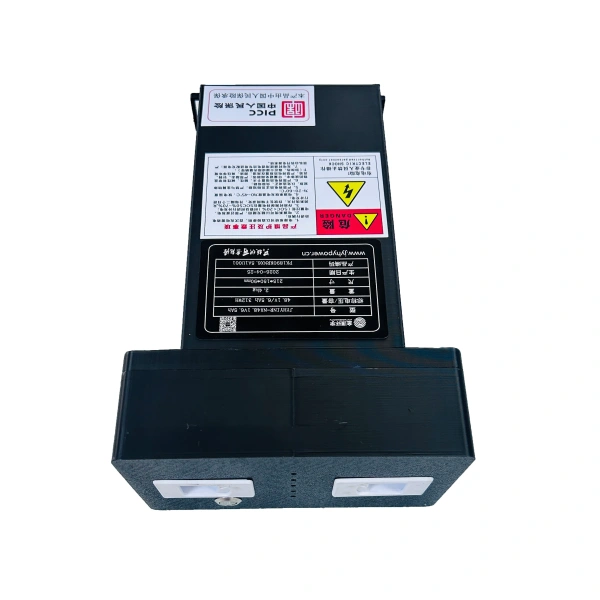
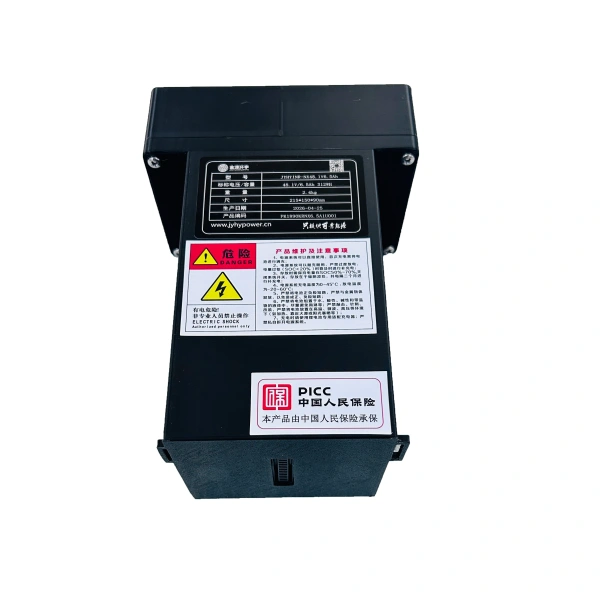
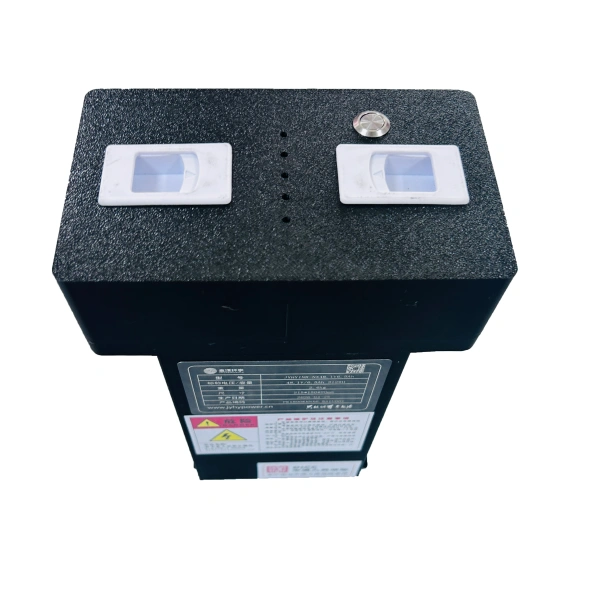
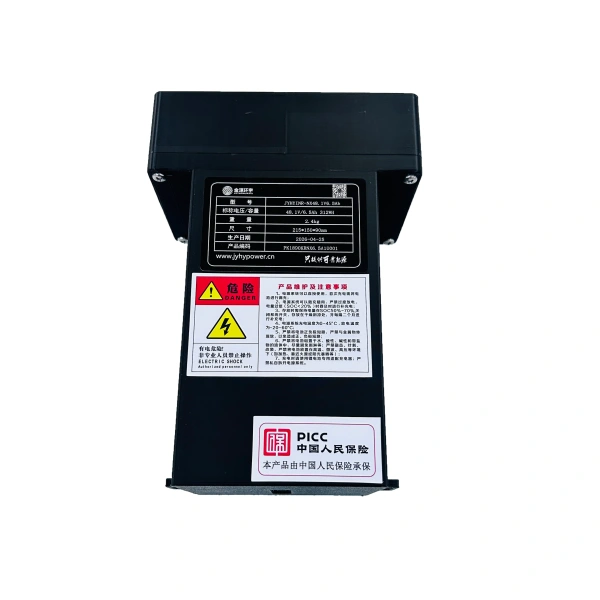
Product Overview
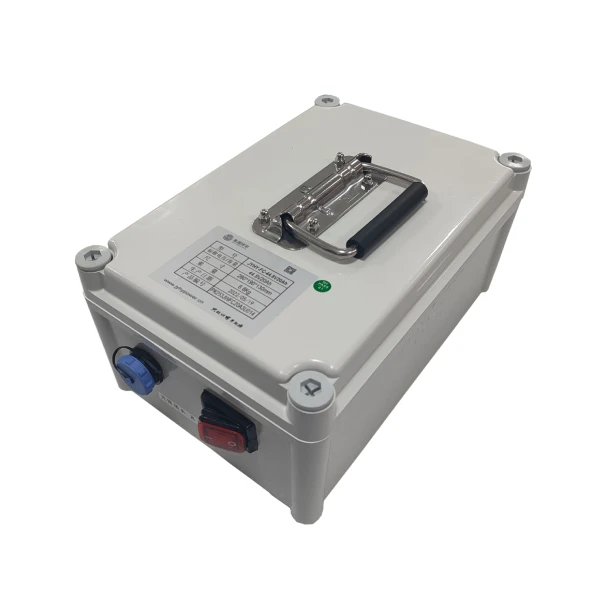
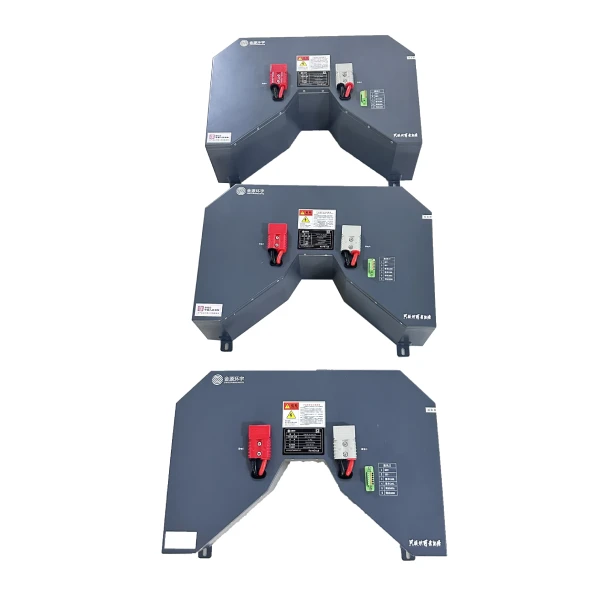
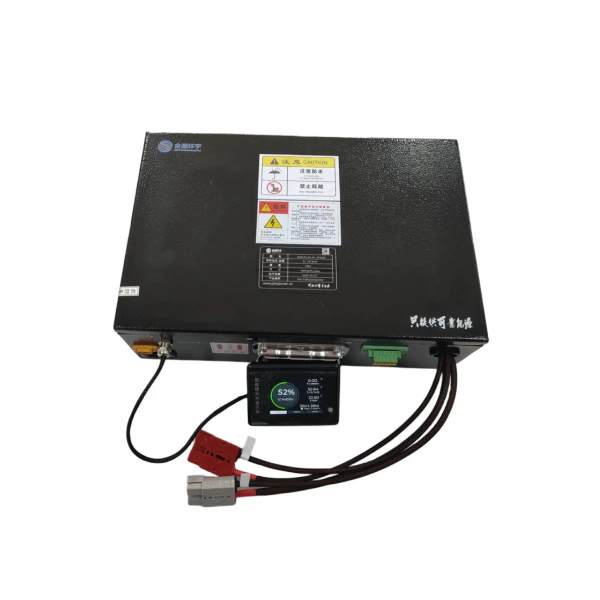
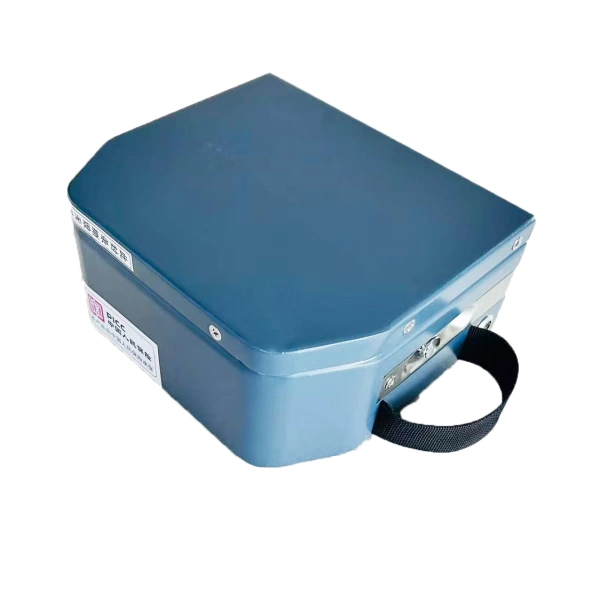
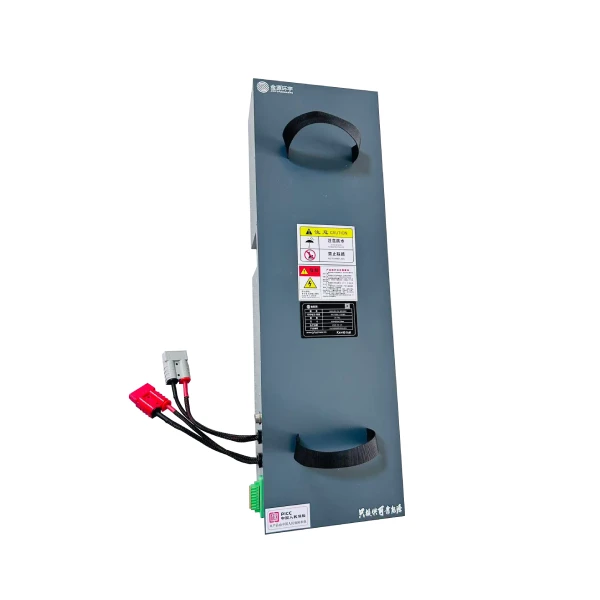
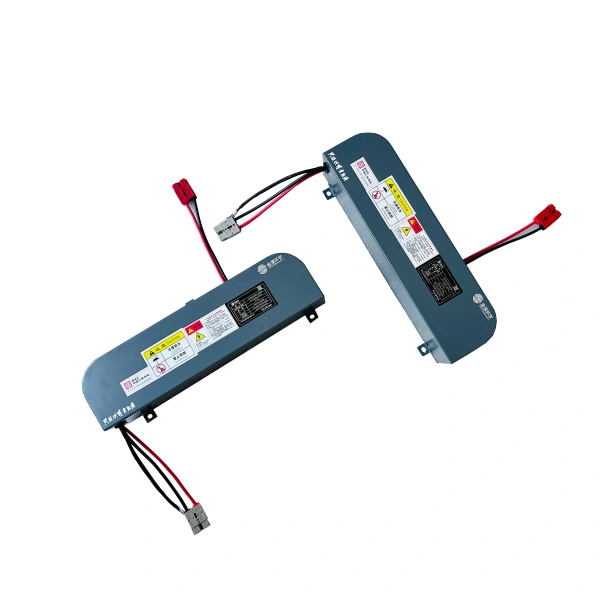
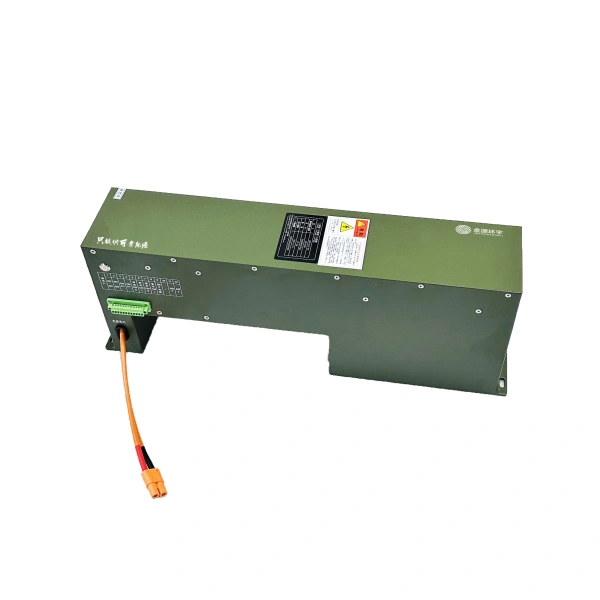
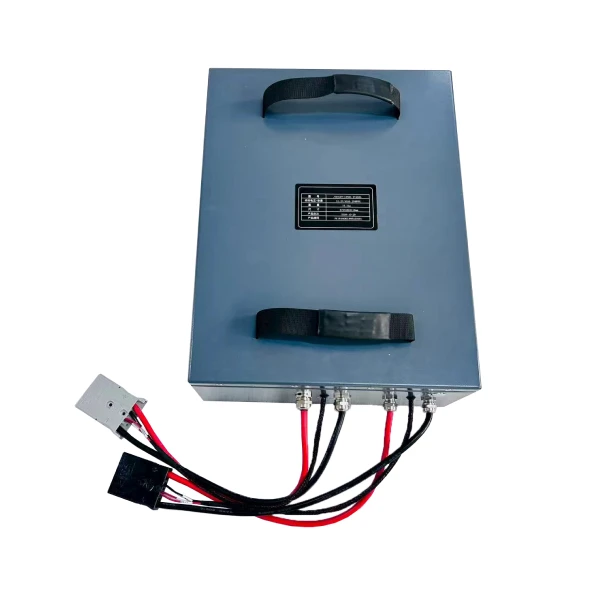
The PK1890-01 is a 46.8V / 10Ah power battery pack built from ternary lithium (NCM) cells, purpose-built for mobile robot applications. The pack combines 3.6V / 5Ah ternary lithium cells in a 2P13S configuration (26 cells – 13 in series, 2 in parallel), delivering a nominal voltage of 46.8V with a rated capacity of 10Ah and a minimum capacity of 9Ah, making it suitable for 48V-class robot platforms.
The system is managed by an integrated Battery Management System (BMS) that continuously acquires the pack’s charging, discharging, over-current, short-circuit and temperature conditions in real time, and applies protection according to preset thresholds. The ternary lithium cells adopt an advanced production process, giving the pack the characteristics of good cell consistency, high specific energy, long service life, safe and reliable operation, and a wide operating temperature range.
The pack is documented as a mobile-robot power-type lithium-ion battery. This introduction describes its outline dimensions, characteristics, technical specifications and handling precautions, based on document PK1890-01 (Version V1.0, issued 2026-06-10).
Technical Specifications
| Parameter | Value | Remark |
| Model | JYHY-46.8V10Ah | Ternary lithium power battery pack |
| Nominal Voltage | 46.8V | 13 cells in series |
| Rated Capacity | 10Ah @ 0.3C, 25°C | — |
| Minimum Capacity | 9Ah @ 0.3C, 25°C | — |
| Cell Model | JYHYLFP-TP-5Ah | — |
| Configuration | 2P13S | 26 cells: 13 series x 2 parallel |
| Standard Charge Current | 5A | — |
| Charge Cutoff Voltage | 54.6V | Configurable; max. 4.2V per cell |
| Standard Discharge Current | 5A | — |
| Discharge Cutoff Voltage | 36.4V | Configurable; min. 2.8V per cell |
| Standard Charge Time | ~1h | Standard equalizing charge |
| Max. Continuous Discharge Current | 100A | 15°C – 45°C |
| Peak Discharge Current | 140A | 15°C – 45°C, ≤3s |
| Communication | RS485 standard protocol | — |
| Communication Connector | Pin 1: KEY+ / Pin 2: KEY- / Pin 3: RS485 A / Pin 4: RS485 B | — |
| BMS Sampling Accuracy | ≤ ±5% | — |
| Charge / Discharge Port | 25mm² flexible silicone cable | Common port for charge and discharge |
| Charging Method | 54.6V / 5A dedicated charger | Max. charge voltage 54.6V, configurable |
| Cycle Life | ≥600 cycles | 0.3C charge to 4.2V, 0.3C discharge to 2.8V; end of life when capacity falls to 80% of initial capacity |
| Enclosure Material | Nylon | — |
| Dimensions (L x W x H) | 117mm x 100mm x 203.5mm (±1mm) | Excluding handle, connectors and mounting feet |
| Weight | ~3.5kg | — |
| Operating Temperature (CC/CV) | Charge: 0°C – 55°C Discharge: -20°C – 60°C Storage: 0°C – 45°C | Extreme temperature limits apply |
| Product Configuration | User manual, certificate of conformity, product specification, inspection report | — |
BMS Protection & Monitoring
The BMS is the circuit system that safeguards the safe and reliable operation of both individual cells and the assembled pack. It samples the pack’s total voltage, individual cell voltages, state of charge, charge/discharge current and battery ambient temperature, monitors the charging and discharging process and status, and provides effective protection and alarm functions. The system typically comprises acquisition circuitry, monitoring and protection circuits, electrical and communication interfaces, thermal management and data transmission.
BMS sampling accuracy: ≤ ±5%.
Communication & Data Monitoring
The pack provides RS485 communication following a standard protocol, allowing real-time supervision by a host computer or simulated device. Reported items include, but are not limited to:
Charge/discharge status, state of charge (SOC), output voltage, output current.
Pack temperature, ambient temperature, PCB temperature, individual cell temperature.
Pack charge over-voltage, charge over-current, discharge under-voltage, reverse polarity, discharge over-current, pack high temperature, ambient high temperature, low capacity, temperature / voltage / current sensor failure, and cell-level high temperature, charge over-voltage, discharge under-voltage, charge over-current and discharge over-current alarms and protections.
Key Features
100A maximum continuous discharge and 140A peak discharge (≤3s) within 15°C – 45°C support demanding acceleration, lifting and climbing duty cycles.
Real-time acquisition and threshold-based protection against over-charge, over-discharge, over-current, short circuit and extreme temperature, with ≤ ±5% sampling accuracy.
Status, environmental and alarm data are available to the robot controller for intelligent energy management and fault diagnosis.
Charging from 0°C to 55°C and discharging from -20°C to 60°C.
A single 25mm² flexible silicone port handles both charging and discharging, simplifying harness design.
Nylon housing measuring 117mm x 100mm x 203.5mm and weighing approximately 3.5kg fits space-constrained robot chassis.
≥600 cycles under the specified 0.3C charge / 0.3C discharge regime before capacity falls to 80% of its initial value.
Operating Conditions
| Condition | Range |
| Charging | 0°C to 55°C |
| Discharging | -20°C to 60°C |
| Storage | 0°C to 45°C (optimum 15°C – 25°C, dry conditions) |
| Operating Environment | Indoor use, ambient -20°C to 60°C, relative humidity (65 ± 20)% |
Typical Applications
Mobile robots and AGV / AMR platforms requiring 48V-class power
Intelligent logistics and material-handling equipment
Industrial mobile platforms and special-purpose robotic systems
Battery-powered equipment operating across a wide temperature range
Why Choose the PK1578 Series?
High specific energy in a compact, lightweight pack
Stable 46.8V output with 10Ah rated capacity
Supports high-torque and highly dynamic robot motions
Comprehensive protection and accurate state monitoring
Seamless integration with robot control systems
Reliable operation from -20°C discharge to 55°C charge
Durable, lightweight and easy to integrate
Lower total cost of ownership over the service period
Notes & Warnings
- Use only the dedicated 54.6V / 5A charger specified for this model. Disconnect the charger once the pack is fully charged; do not charge for extended periods.
- Charge current must not exceed 5A; charge voltage must not exceed the maximum value stated in the specification.
- Charge only within an ambient temperature of 0°C to 55°C. Charging is strictly prohibited when the ambient temperature is below 0°C; between 0°C and 10°C the charge current must be limited to 0.3C.
- Discharge within the specified temperature range. Note that the specification table states -20°C to 60°C, while the operating instructions (section 5.2.2) state -15°C to 60°C.
- Do not reverse-charge. The system has reverse-connection protection, but the positive and negative poles must be connected correctly – reversed polarity will destroy the pack and create a safety hazard.
- Do not over-discharge. Switch the pack off after use and recharge within 24 hours after a full discharge. During long idle periods the pack may self-discharge into an over-discharge state, so recharge periodically to keep the voltage above 46.8V.
- Observe the discharge current limits: the handling instructions (section 5.2.1) require the continuous discharge current not to exceed 50A, whereas the specification table lists a 100A maximum continuous discharge at 15°C – 45°C. Confirm the applicable limit with the manufacturer for the intended duty cycle.
- The pack voltage exceeds the 36V human safety threshold – never touch the positive and negative terminals with the body directly.
- Do not connect packs in series or parallel; do not disassemble, crush, drop, nail-pierce or weld the pack; never short-circuit the terminals.
- Keep away from heat sources, fire, water and direct sunlight; store in a dry, ventilated indoor place away from other hazardous materials.
- For storage longer than 1 month, keep the pack at approximately 50% SOC: charge at 0.3C until the pack voltage is above 46.8V, switch the pack off, then store it under the recommended conditions. Per-cell storage voltage: 3.6V – 3.7V.
- For long-term storage, charge the pack for 2 hours every two months.
- Stop charging immediately if a high-temperature warning or a single-cell over-voltage warning is reported.
- Charge immediately when a low-capacity alarm appears. Over-discharge is strictly prohibited.
- Before use, inspect the package and the pack for damage, leakage or missing accessories, and verify terminal polarity and voltage.
Ordering Information
For customisation – capacity, voltage, connectors, communication protocol or other application-specific requirements – please provide your application details, including load profile, duty cycle, ambient conditions and desired interface. Engineering support is available for tailored solutions.
For further technical data or to request a sample, please contact our sales team.
Specifications subject to change without notice. Always refer to the latest product datasheet (PK1890-01, V1.0, 2026-06-10).