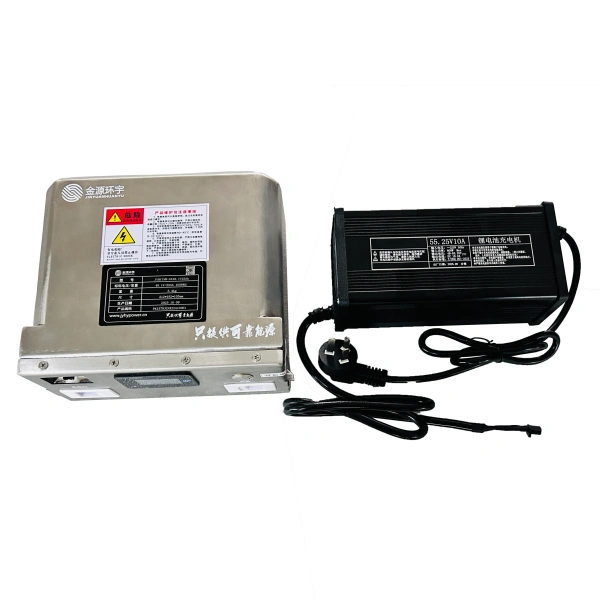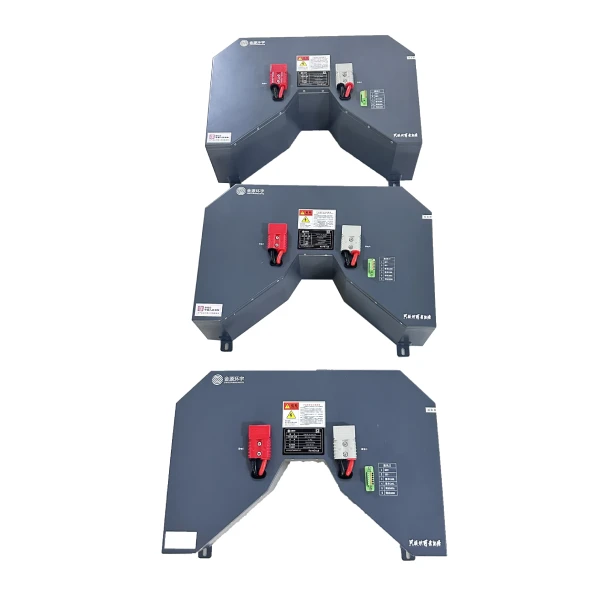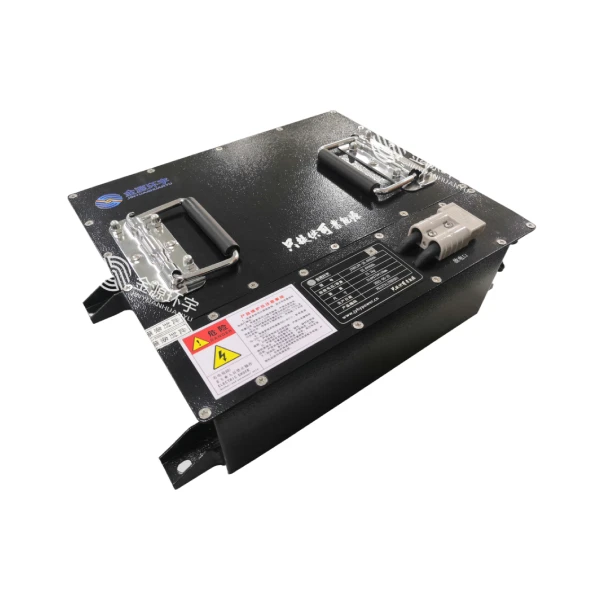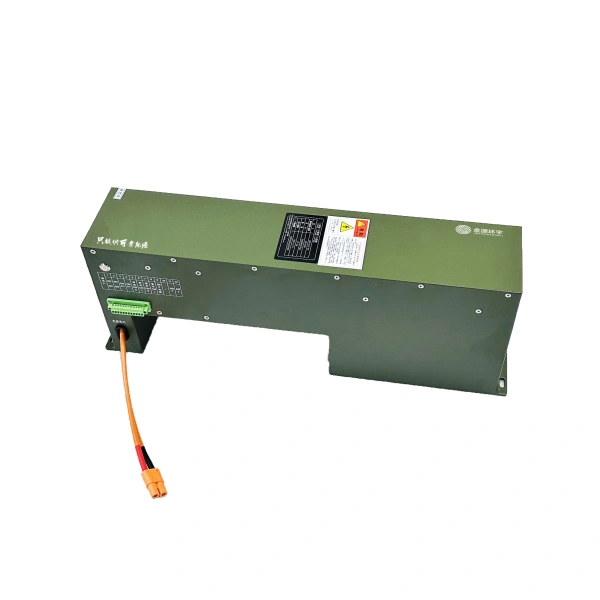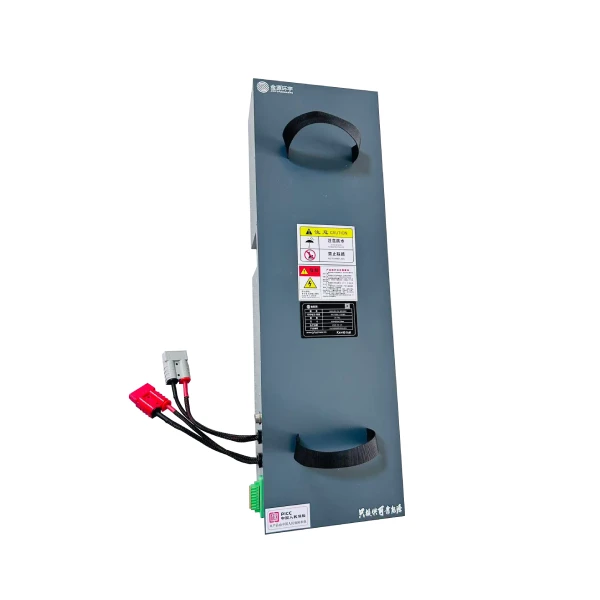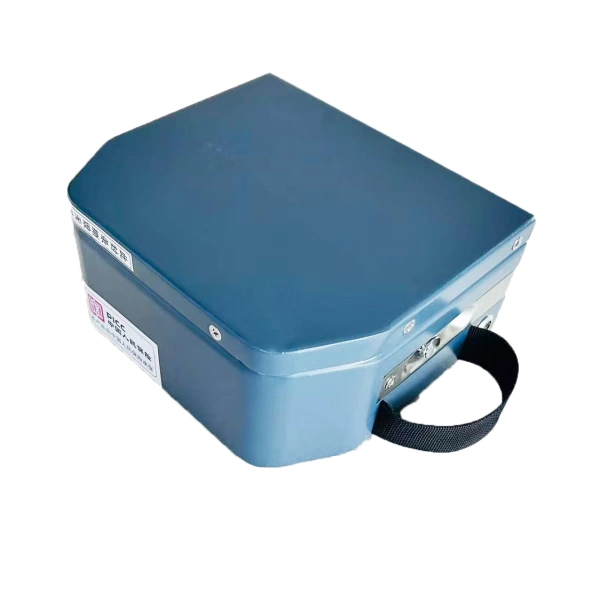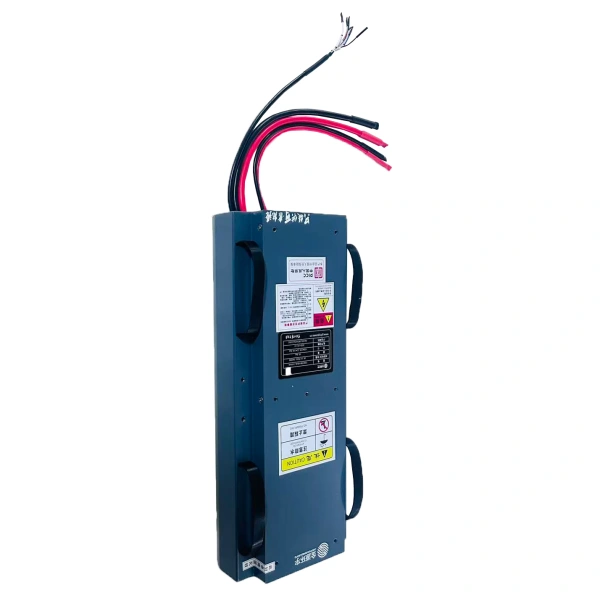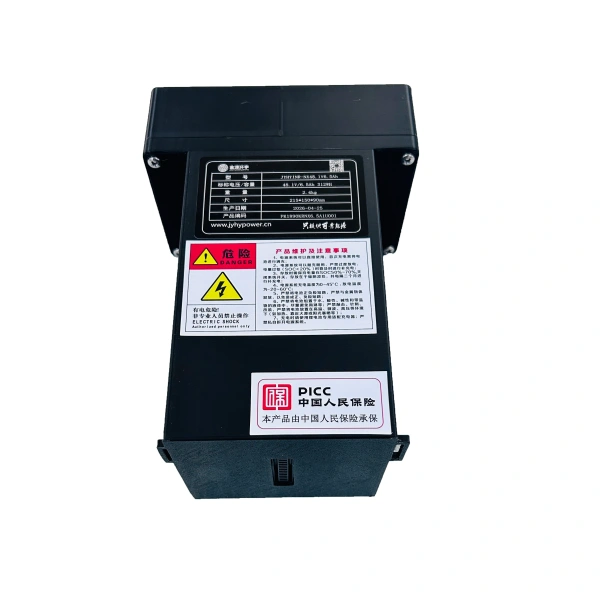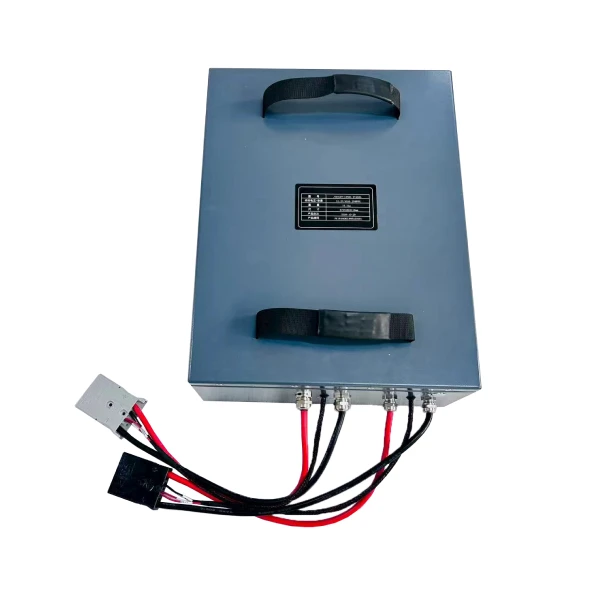
Product Overview
The PK1844 is a 51.2V / 40Ah power battery pack composed of 3.2V / 5Ah lithium iron phosphate (LiFePO4) cells in a 16S8P series-parallel configuration. The pack provides a nominal voltage of 51.2V with a rated capacity of 40Ah, and is documented as an AGV on-board power-type lithium-ion battery developed against customer requirements.
The pack is certified-ready for the European market: an IEC 62619 test report is available for this model (see the dedicated Certification section, where certificate number, issuing laboratory and scope of coverage are listed). Combined with its 16S8P LiFePO4 construction and 2000-cycle design life, the certification supports deployment in EU industrial, warehousing and mobile-robot projects.
The system collects real-time data on charging, discharging, over-current, short circuit and temperature, and applies protection according to preset thresholds. The LiFePO4 cells adopt an advanced production process, giving the pack good cell consistency, high specific energy, long service life, safe and reliable operation and a wide operating temperature range.
This introduction describes the pack’s outline dimensions, characteristics, technical specifications and handling precautions, based on document PK1844 (Version V1.0, issued 2026-09-28).
Certification – IEC 62619
The PK1844 is supported by an IEC 62619 test report. IEC 62619 is the international safety standard for secondary lithium cells and batteries used in industrial applications, and a valid test report is a prerequisite for battery packs placed on the EU industrial and mobile-robot market. The report is held by the manufacturer and is available to customers and integrators on request.
The items below summarise the certification status. Entries marked [TO BE CONFIRMED] are not stated in the current product specification and must be verified against the issued report before being quoted in tenders, declarations of conformity or customer documentation.
| Standard | IEC 62619 (safety requirements for industrial secondary lithium cells and batteries) |
| Test report status | Available for this model; copy obtainable from the manufacturer on request |
| Report number | [TO BE CONFIRMED] |
| Certificate number | [TO BE CONFIRMED] |
| Issuing laboratory / test house | [TO BE CONFIRMED] |
| Scope of coverage | [TO BE CONFIRMED] – cell level or battery pack level |
| Applicable model(s) | PK1844 |
| Issue date | [TO BE CONFIRMED] |
| Validity / expiry | [TO BE CONFIRMED] |
| Accreditation mark on report | [TO BE CONFIRMED] |
Technical Specifications
| Model | JYHY-51.2V40Ah-00 | Cover page and parameter table differ in capitalisation only |
| Nominal Voltage | 51.2V | 16 cells in series |
| Rated Capacity | 40Ah | @0.3C (3A), 25 degC |
| Cell Model | 26700-5Ah | 3.2V / 5Ah cylindrical cell |
| Configuration | 16S8P | 128 cells |
| Standard Charge Current | 35A | See Notes for the 20A limit in section 3.1.1 |
| Charge Cutoff Voltage | 58.4V | – |
| Standard Charge Time | 1.5h | – |
| Standard Discharge Current | 20A | – |
| Discharge Cutoff Voltage | 41.6V | – |
| Continuous Discharge Current | 35A | – |
| Communication | RS485 | Protocol details per separate communication protocol document |
| Communication Connector | Pin 1 KEY+ / Pin 2 KEY- / Pin 3 Vehicle 485-A / Pin 4 Vehicle 485-B | JST-04R-JWPF-VSLE-S, 200mm flying lead |
| BMS Sampling Accuracy | <= +/-5% | – |
| Charge Terminal | AWG8# Amass-LCB50-F | 100mm flying lead |
| Discharge Terminal | AWG7# Amass-LCB50-M | 100mm flying lead |
| Charging Method | 58.4V / 20A dedicated LiFePO4 charger | Max. charge voltage 58.4V, configurable |
| Cycle Life | >= 2000 cycles | 0.2C charge to 3.6V, 0.2C discharge to 2.0V; end of life at 80% of initial capacity |
| Operating Temperature | Charge: 2 degC to 52 degC Discharge: -18 degC to 57 degC | See Notes for wider limits in the operating instructions |
| Storage Temperature | -10 degC to +45 degC (< 1 month) 0 degC to +35 degC (< 3 months) | – |
| Weight | 25kg +/-1 | – |
| Dimensions (L x W x H) | 370mm x 280mm x 116mm (+/-1mm) | – |
| Enclosure | Sheet metal Q235, Alpine Blue | – |
BMS Protection & Monitoring
The pack integrates a Battery Management System that acquires the pack’s total voltage, individual cell voltages, state of charge, charge/discharge current and battery ambient temperature, monitors the charging and discharging process and status, and provides protection and alarm functions. The system typically comprises acquisition circuitry, monitoring and protection circuits, electrical and communication interfaces, thermal management and data transmission.
BMS sampling accuracy: <= +/-5%.
Communication & Data Monitoring
The pack provides RS485 communication through a 4-pin JST-04R-JWPF-VSLE-S connector with a 200mm flying lead. Pin 1 and pin 2 provide the KEY+/KEY- switch interface, while pins 3 and 4 carry the vehicle RS485-A and RS485-B lines. Detailed register and data definitions are given in the separate communication protocol document.
Status, environmental and alarm quantities are available to the host controller for real-time supervision, enabling intelligent energy management and fault diagnosis on the vehicle.
Key Features
The PK1844 is supported by an IEC 62619 test report, facilitating access to the EU industrial battery market. Certificate number, issuing laboratory and scope of coverage are listed in the Certification section.
Lithium iron phosphate cells arranged 16S8P deliver 51.2V / 40Ah with high safety, long service life and stable thermal behaviour.
>= 2000 cycles under standard charge/discharge conditions before capacity falls to 80% of its initial value.
AWG8# Amass-LCB50-F charging and AWG7# Amass-LCB50-M discharging terminals with 100mm flying leads simplify harness integration.
Status, environmental and alarm data are available to the vehicle controller for intelligent energy management and fault diagnosis, at 115200 bps.
A 370 x 280 x 116mm Q235 housing at 25kg +/-1 fits space-constrained AGV chassis.
Charging from 2 degC to 52 degC and discharging from -18 degC to 57 degC, with dedicated storage limits for short and long idle periods.
A 16-series LiFePO4 platform compatible with standard 48V/51.2V AGV drive and charger architectures.
Operating Conditions
| Condition | Range |
| Charging | 2 degC to 52 degC |
| Discharging | -18 degC to 57 degC |
| Storage (< 1 month) | -10 degC to +45 degC |
| Storage (< 3 months) | 0 degC to +35 degC |
| Storage (general) | 0 degC to 45 degC (optimum 15 degC – 25 degC, dry conditions) |
| Operating Environment | Indoor use, -20 degC to 60 degC, relative humidity (65 +/- 20)% |
| Storage Voltage | 3.2V – 3.35V per series cell |
Typical Applications
AGV and AMR platforms requiring a 51.2V LiFePO4 power source
Intelligent warehousing and material-handling equipment
Industrial mobile platforms and special-purpose robotic systems
EU-market projects requiring an IEC 62619 test report as part of the technical file
Why Choose the PK1844?
Simplifies EU market access and customer technical-file review
High safety and stable output on a proven 51.2V platform
Lower total cost of ownership over the service period
Reliable state monitoring and protection thresholds
Seamless integration with robot control systems
Secure high-current connection with simple harness routing
Compact footprint for space-constrained AGV chassis
Clear guidance for short and long idle periods
Notes & Warnings
- Certification: the IEC 62619 test report is stated to be available for this model, but the report number, certificate number, issuing laboratory, scope of coverage (cell or pack), issue date and validity are NOT stated in the specification. All such fields are marked [TO BE CONFIRMED] in the Certification section and must be verified against the issued document before publication.
- Charge current: the specification table lists a 35A standard charge current, while section 3.1.1 states that the charging current must not exceed 20A, and the recommended charger is rated 58.4V / 20A. Both values are reproduced as published; the 20A limit is the safe operating ceiling for charging.
- Charge temperature: the specification table states 2 degC to 52 degC, whereas section 3.1.3 states 0 degC to 55 degC. Both values are reproduced as published; the narrower table range is used in the summary table.
- Discharge temperature: the specification table states -18 degC to 57 degC, whereas section 3.2.2 states -20 degC to 60 degC. Both values are reproduced as published; the narrower table range is used in the summary table.
- Storage temperature: section 4.1 states 0 degC to 45 degC, while the parameter table gives -10 degC to +45 degC (< 1 month) and 0 degC to +35 degC (< 3 months). The table values are used in the summary table; all are reproduced as published.
- Serial numbering: item numbers 5 and 13 are missing from the specification table. The absence is reproduced as published and does not imply a removed parameter.
- Not stated in the specification: ingress protection rating (IP class), minimum capacity, product configuration list, UN38.3 test summary and CE marking. No values are assumed in this document.
- Charge current must not exceed 20A; charge voltage must not exceed 58.4V; continuous discharge current must not exceed 35A.
- Do not reverse-charge. The system has reverse-connection protection, but reversed polarity will destroy the pack and create a safety hazard.
- Do not over-discharge. Switch the pack off after use, recharge within 24 hours after a full discharge, and keep the voltage above 51.2V during long idle periods.
- The pack voltage exceeds the 36V human safety threshold – never touch the positive and negative terminals with the body directly.
- Use only the dedicated 58.4V / 20A charger. Disconnect the charger once the pack is full; do not charge for extended periods.
- Do not connect packs in series or parallel; do not disassemble, crush, drop, nail-pierce or weld the pack; never short-circuit the terminals.
- Keep away from heat sources, fire, water and direct sunlight; store in a dry, ventilated indoor place away from other hazardous materials.
- For storage longer than three months, keep the pack at approximately 50% SOC: charge at 0.3C until the pack voltage is above 51.2V, switch the pack off, then store it under the recommended conditions.
- Do not store or transport the pack together with metal objects such as iron plates, aluminium blocks, hairpins or necklaces.
- Before use, inspect the package and the pack for damage, leakage or missing accessories, and verify terminal polarity and voltage.
- The pack contains hazardous metals and must be recycled or disposed of through a qualified organisation in accordance with local regulations.
Ordering Information
For customisation – capacity, voltage, connectors, communication protocol or other application-specific requirements – please provide your application details, including load profile, duty cycle, ambient conditions and desired interface. Engineering support is available for tailored solutions. A copy of the IEC 62619 test report and the full technical file can be supplied with the quotation on request.
For further technical data or to request a sample, please contact our sales team.